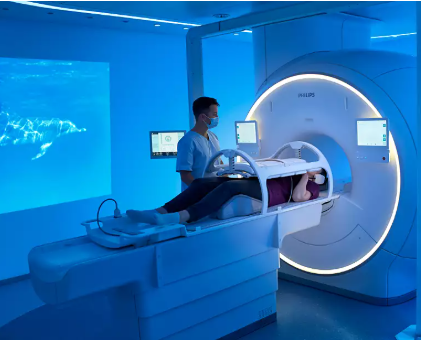
Advanced MRI Systems for Precision Imaging and Patient Comfort
Delivering high-performance magnetic resonance imaging solutions tailored for clinical accuracy, speed, and workflow efficiency
Magnetic Resonance Imaging (MRI) Systems
MRI systems use magnetic fields and radio waves to produce detailed 3D images of organs, tissues, and neurological structures without ionizing radiation.
They are essential for early detection and monitoring of tumors, neurological disorders, musculoskeletal injuries, and vascular diseases.
Newer MRI platforms feature noise reduction, AI-powered imaging software, and cloud-enabled data access for faster, more comfortable scans
Clinical Diagnostic Testing provides scalable MRI solutions across North America with expert integration, support, and performance optimization.
Core Components
In addition to offering products and systems developed by our team and trusted partners for Magnetic Resonance Imaging (MRI) Systems, we are proud to carry top-tier technologies from Global Advanced Operations Tek Inc. (GAO Tek Inc.) and Global Advanced Operations RFID Inc. (GAO RFID Inc.). These reliable, high-quality products and systems enhance our ability to deliver comprehensive technologies, integrations, and services you can trust. Where relevant, we have provided direct links to select products and systems from GAO Tek Inc. and GAO RFID Inc.

Hardware
Superconducting Magnet Assemblies – Delivers high-field strength (1.5T–3T and above) for ultra-clear imaging
Gradient Coil Systems – Enables spatial encoding with high speed and accuracy
RF Coils (Body, Head, Limb, Surface) – Designed for flexible, anatomy-specific image acquisition
Patient Tables with Auto-Positioning – Enhances comfort and exam efficiency
Magnet Cooling Systems – Helium-free and zero-boil-off cooling options for safety and reduced maintenance

Software
AI-Based Image Reconstruction Algorithms – Reduces scan time while preserving diagnostic fidelity
Motion Correction Technology – Minimizes motion artifacts for clear imaging
3D Visualization and MPR Tools – Supports advanced clinical interpretation
Workflow Automation Suites – Auto-scheduling, scanning protocols, and image transfer

Cloud Services
DICOM-Compatible Storage Solutions – Secure archiving and fast retrieval of MRI datasets
Remote Diagnostics and System Monitoring – Enhances uptime with predictive maintenance
Tele-imaging Integration – Enables collaboration between radiologists and specialists across sites
Why Choose Clinical Diagnostic Testing?
Core Capabilities of Magnetic Resonance Imaging (MRI) systems
Key Features
Fast scanning with reduced noise levels
Real-time imaging capabilities
High spatial and temporal resolution
Pediatric and cardiac imaging protocols
Lightweight RF coils for patient comfort
Automatic patient recognition and coil selection
Seamless workflow integration with hospital systems
Integrations
Radiology Information Systems (RIS)
Electronic Medical Records (EMR)
Picture Archiving and Communication Systems (PACS)
Hospital Networks and IT Infrastructure
Third-party AI diagnostic tools
Compatibility
Supports DICOM and HL7 protocols
Compatible with major EMR platforms (e.g., Epic, Cerner)
Operates within Windows- and Linux-based hospital environments
Easily upgradeable via modular software/hardware packages
Benefits
Enhances early diagnosis with clear anatomical detail
Minimizes patient discomfort and scan durations
Increases facility throughput and operational efficiency
Reduces repeat scans due to motion correction and AI tools
Supports data-driven care models with cloud-connected analytics
Backed by expert guidance, training, and after-sales support from Clinical Diagnostic Testing
Applications
Neurological and brain imaging
Spine and musculoskeletal evaluations
Cardiac MRI
Liver and abdominal studies
Oncology diagnosis and treatment planning
Pediatric imaging
Industries
Hospitals and academic medical centers
Outpatient diagnostic centers
Neurology and orthopedic specialty clinics
Government healthcare agencies
Veterinary and research institutions
Relevant U.S. & Canadian Industry Standards and Regulations
ASTM F2503-13
Provides guidelines for marking medical devices and implants with MR safety information.
IEC 60601-2-33
Specifies safety and performance standards for magnetic resonance imaging (MRI) equipment.
FDA 21 CFR Part 820 (QSR)
Establishes quality system requirements for medical device manufacturers in the U.S.
SOR/98-282
Health Canada MDR
Case Studies
United States (Academic Hospital in New York)
A major teaching hospital partnered with Clinical Diagnostic Testing to replace aging MRI units with newer 3T models featuring AI reconstruction. Alongside system installation, we provided software integration with existing PACS and RIS infrastructure. Within six months, scan times were reduced by 40%, and patient throughput improved by 33%.
United States (Rural Imaging Center in Colorado)
An underserved imaging center in Colorado needed a solution to meet local demand for advanced neuroimaging. We delivered a compact 1.5T MRI unit with remote radiologist access via secure cloud services. The result: a 60% increase in scan availability and 24/7 image review capabilities.
Canada (Neurology Center in Ontario)
A private neurology clinic in Ontario required an MRI system optimized for head and spine studies. Clinical Diagnostic Testing implemented a GAO Tek Inc. solution tailored to their workflow, including specialized neuro RF coils and integrated 3D visualization. Follow-up results showed a 45% decrease in patient wait times and improved diagnostic accuracy across all cases.
Need Advanced MRI Systems for Detailed Imaging?
Contact Clinical Diagnostic Testing now to schedule a consultation, request a quote, or learn more about our MRI technology offerings. The Clinical Diagnostic Testing team is here to help you deliver diagnostic excellence with confidence.